

Schema Therapy

What is Schema Therapy?

If you’ve been struggling with the same issues for a long time, or if you understand intellectually what’s going wrong but find it difficult to make lasting changes, Schema Therapy may be able to help.

Schema Therapy is an integrative approach that combines elements from Cognitive Behavioural Therapy (CBT), attachment theory, object relations, as well as Gestalt and experiential therapies.

Unlike some therapies that focus mainly on the factors maintaining difficulties, Schema Therapy is designed to explore the development of psychological patterns and provide corrective emotional experiences that encourage deeper, long-lasting change.

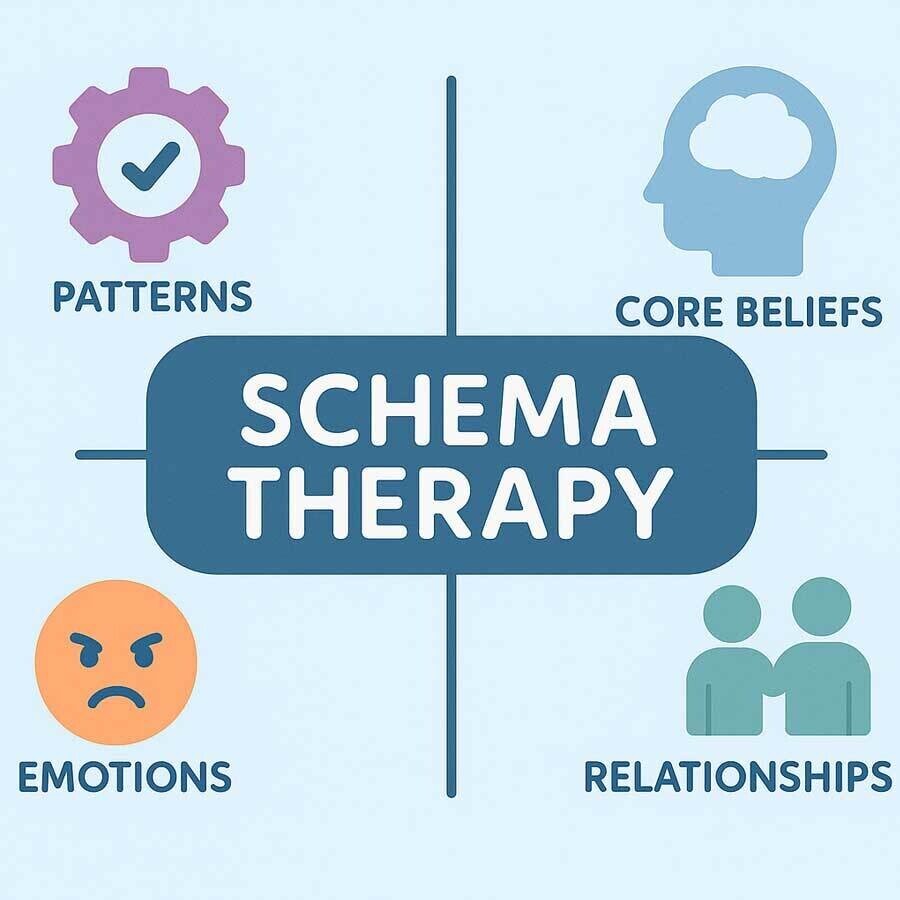
To achieve this, Schema Therapy uses a mix of experiential techniques, such as imagery rescripting and chair work, alongside cognitive and behavioural methods to address unhelpful patterns in thinking, emotion, relationships, and behaviour.

What are Schemas?

Schemas are the mental frameworks that help us organise and interpret information about ourselves, others, places, and events. They develop from early life experiences and shape the way we perceive and respond to the world. While schemas can help us make sense of life, negative or rigid schemas can create stereotypes, self-limiting beliefs, and patterns that contribute to personality and mental health difficulties.

Over time, these schemas influence how we respond to new experiences. For example, if a schema forms around abandonment or mistrust, you may react to situations with fear, anxiety, or withdrawal, even if the present situation is safe. Schemas operate like ingrained patterns in the mind that guide reactions, often in ways that are unhelpful or self-limiting.

Schemas typically develop through repeated experiences and the ways we interpret them. Our brain forms expectations and plans for how to respond to events, people, or situations in the future. Constant rumination or overthinking can reinforce these patterns, making them rigid and difficult to change. Negative schemas can lead to emotional distress, anxiety, low self-esteem, and difficulties in relationships.

What Schema Therapy does

Schema Therapy helps you identify and challenge negative schemas and replace them with healthier, more adaptive patterns. Using techniques drawn from CBT and experiential therapies, your therapist will work with you to:

  • Recognise unhelpful thinking, feeling, and behavioural patterns.
  • Understand the origins of these patterns and how they continue to influence your life.
  • Learn constructive ways to meet your emotional needs.
  • Transform negative schemas into positive traits that support emotional wellbeing.

The therapy focuses on both cognitive and emotional change, helping you develop more balanced beliefs, healthier behaviours, and stronger interpersonal skills.

Who can benefit from Schema Therapy?

Schema Therapy is particularly effective for individuals who struggle with persistent psychological patterns, personality disorders, or chronic mental health issues. Some of the difficulties that Schema Therapy can help with include:

  • Chronic Depression – Persistent sadness, emptiness, and lack of engagement in life.
  • Anxiety – Excessive fear, nervousness, and panic that interfere with daily functioning.
  • Relationship Difficulties – Challenges in forming or maintaining healthy relationships, including intimacy and communication issues.
  • Personality Disorders – Traits and behaviours that are deeply ingrained and significantly impact functioning.

By addressing these core patterns, Schema Therapy helps you manage emotional distress, improve relationships, and develop a more positive, empowered sense of self.

Is Schema Therapy right for you?

Schema Therapy is ideal if you want to address long-standing emotional patterns that continue to interfere with your life. It’s especially useful if you have experienced repeated negative thinking, chronic anxiety, loneliness, or relationship difficulties.

It is particularly suited for deep-seated patterns, such as abandonment, mistrust, or self-criticism, which often develop over years of repeated negative experiences. By addressing these at a core level, you can achieve lasting change, reduce anxiety and emotional distress, and feel more in control of your life. Through Schema Therapy, you can learn to manage negative energy, reframe unhelpful patterns, and develop healthier ways of thinking, feeling, and behaving. Many people find that over the course of therapy, they gain greater emotional resilience, improved self-esteem, and a more positive outlook on life.

How I might use Schema Therapy

In Schema Therapy, I will work closely with you to understand your experiences and create a tailored treatment plan. Sessions will involve:

  • Exploring negative thoughts, feelings, and behaviours.
  • Using experiential exercises to reframe past experiences.
  • Learning practical strategies to meet emotional needs in healthier ways.
  • Practicing new behaviours and perspectives to challenge old schemas.

Through this process, you will gradually replace negative patterns with constructive thinking and behaviour, improving both your emotional wellbeing and your ability to relate to others.

The length of therapy depends on your personal goals, the nature of the difficulties you want to work on, and how much time and energy you can dedicate to working on these goals between sessions. Typically, after an assessment phase, I will discuss the likely number of sessions you may need or agree on an initial block of therapy, reviewing progress along the way.

For further insight into Schema Therapy, the book Reinventing Your Life by Jeffrey Young and Janet Klosko is a highly recommended resource.