



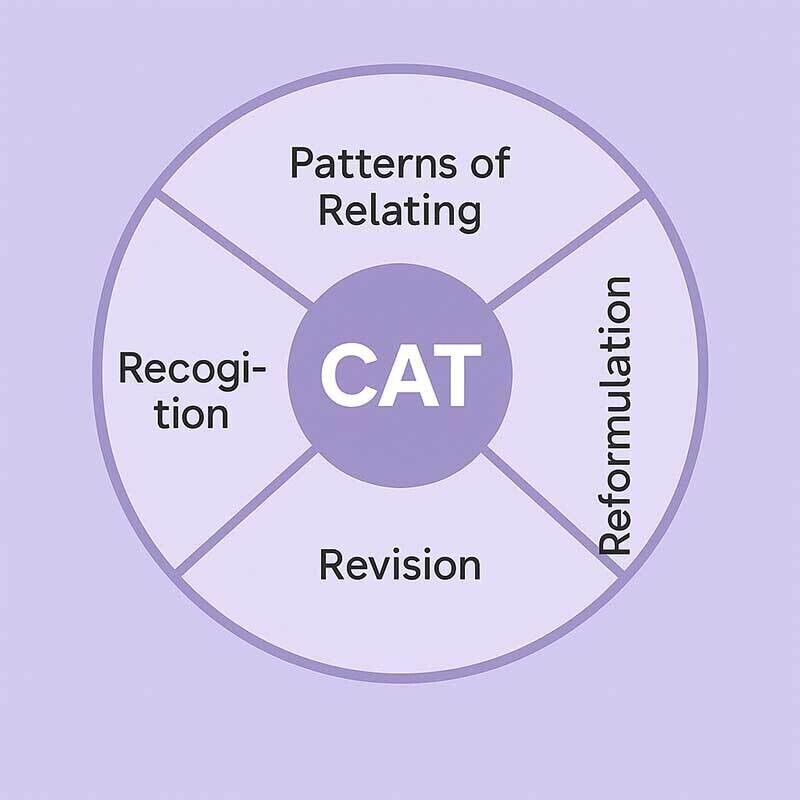
What is Cognitive Analytic Therapy (CAT)?
Cognitive Analytic Therapy (CAT) is a collaborative, time-limited talking therapy that helps people understand how their patterns of thinking, feeling, and relating to others can contribute to difficulties in their lives. Rather than focusing on psychiatric labels or isolated symptoms, CAT explores the underlying relational and behavioural patterns that leave you feeling stuck and supports you in finding ways to change them.
CAT is an active and participatory process, inviting you to step back and observe your life from a more objective perspective. Working closely with your therapist, you identify recurring patterns, explore how they developed, and take an active role in deciding what needs to change, whether small adjustments, such as breaking free from avoidance, or larger changes, like finding new ways of relating to others. A key focus is on patterns of relating and the effect they have on your relationships, work, and sense of self.
The therapy is also creative, using tools such as letters from the therapist and a collaboratively developed diagram to help you understand your patterns, recognise traps, and practice healthier ways of coping and relating. This approach ensures that you remain engaged, empowered, and supported throughout every stage of the therapy. As its name suggests, CAT combines two approaches:
- Analytic: Exploring your past experiences and relationships to understand how they shaped your current patterns and sense of self.
- Cognitive: Examining your current coping strategies and finding new, more effective ways to manage challenges.