

EMDR Therapy

What is Eye Movement Desensitisation and Reprocessing (EMDR) Therapy

Eye Movement Desensitisation and Reprocessing (EMDR) is an evidence-based therapy that helps people process and heal from difficult or traumatic experiences. Our minds have an incredible ability to heal, much like our bodies do. EMDR supports this natural process by helping the brain to process and integrate painful experiences that may have become “frozen” in time. It focuses on reprocessing distressing memories so that the emotions and symptoms connected to them can be resolved.

Although EMDR was originally developed to treat Post-Traumatic Stress Disorder (PTSD), it is now widely used to support people with a range of other issues. This therapy can reduce distress, restore emotional balance, and help you regain control over your life.

While the name might sound technical, EMDR is based on a natural healing process that helps your brain make sense of distressing experiences. When we go through trauma, our brain’s ability to process information can become overwhelmed. This can leave memories “stuck” in the limbic system, the part of the brain that stores emotional responses, rather than being processed and filed away as past events.

As a result, reminders of the trauma can trigger intense emotional reactions such as anxiety, panic, anger, or sadness even long after the event has passed. EMDR helps to reconnect and reprocess these memories, linking them with more adaptive and positive thoughts. The memory remains, but it no longer feels as painful or intrusive, allowing you to feel calmer and more in control.

Through structured sessions, your therapist will guide you in reprocessing distressing memories, reducing their emotional charge, and restoring your sense of balance. Over time, you will find that you can recall past events without being flooded by painful emotions - freeing you to move forward with greater peace and confidence.

What EMDR can help with

EMDR is often described as life-changing because it helps people break free from the hold of painful past experiences. While it began as a treatment for single-event trauma, it is now used to support many different challenges, including:

  • Low self-esteem, performance, and motivation issues
  • Depression
  • Anxiety, panic, and OCD
  • Phobias
  • Mood instability and bipolar disorder
  • Body dysmorphic disorder
  • Complicated grief
  • Pain management
  • Addictions
  • Complex PTSD

It can also support recovery from distressing experiences that continue to affect your psychological or physical wellbeing.

EMDR combines gentle side-to-side eye movements with guided discussion to help your brain process difficult memories. These eye movements are similar to those that occur during REM (Rapid Eye Movement) sleep, the stage when your brain naturally processes emotions and experiences.

During therapy, you’ll work with your therapist to safely recall distressing memories while focusing on these movements. The goal isn’t to erase memories but to help the brain reprocess them so they lose their emotional intensity. Over time, you can remember the events without feeling overwhelmed, making it easier to move forward.

Conditions EMDR can treat

EMDR is most widely recognised for treating PTSD and trauma, and it’s recommended by both the World Health Organization (WHO) and NICE (National Institute for Health and Care Excellence). It is also used to help with:

  • Childhood abuse or neglect
  • War-related experiences
  • Surgical or medical trauma
  • Assault
  • Natural disasters
  • Accidents
  • Depression, anxiety, and stress

How Effective Is EMDR therapy?

The effectiveness of Eye Movement Desensitisation and Reprocessing (EMDR) has been well established through extensive scientific research. Numerous clinical trials have confirmed its validity and reliability in treating trauma-related conditions. For detailed research findings, you can visit www.emdr-europe.org and www.emdr.org.

EMDR is recommended by the National Institute for Health and Care Excellence (NICE) as an effective treatment for Post-Traumatic Stress Disorder (PTSD). Research consistently shows that EMDR can lead to a significant reduction in symptoms, often producing noticeable improvements in a relatively short period of time.

Therapy sessions typically last 60 minutes for assessments and around 90 minutes for reprocessing sessions. Most people benefit from 6 to 12 sessions, although individuals who have experienced multiple or complex traumas may require a longer course of treatment.

EMDR therapy offers many benefits for people recovering from trauma and emotional distress. It can help you recover more effectively from past traumatic experiences and gain a greater sense of emotional balance and control. Many people notice improved focus, self-awareness and perspective on themselves and their lives. The results of EMDR are often achieved relatively quickly compared to other therapeutic approaches, allowing individuals to experience meaningful change in a shorter period of time. The therapy also reduces stress and anxiety, helping you to manage difficult emotions more calmly and confidently. Over time, EMDR encourages a more positive, grounded, and hopeful outlook on life, empowering you to move forward without being held back by the past.

How Does EMDR Work?

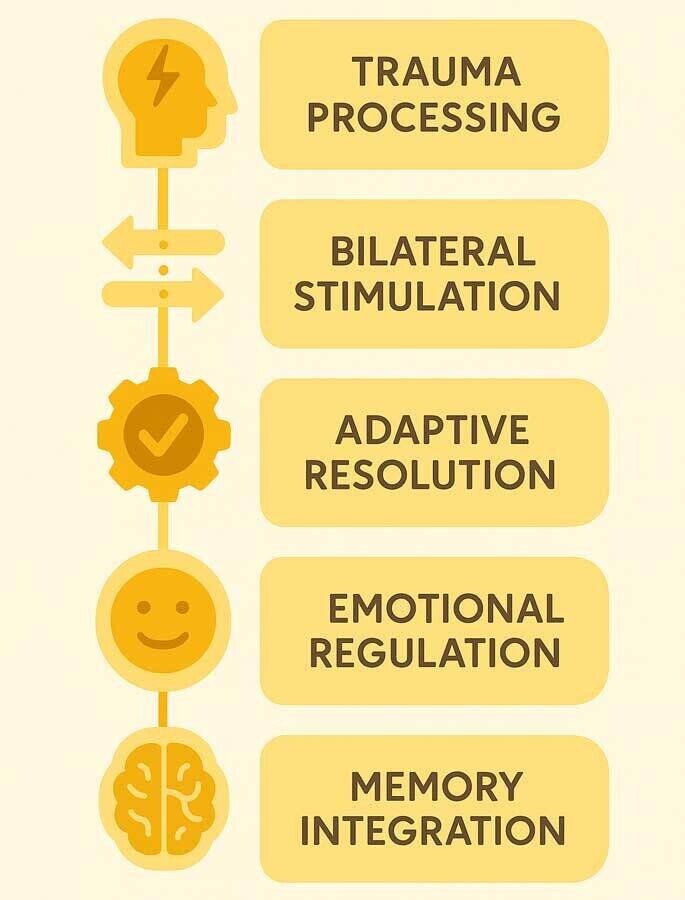
Eye Movement Desensitisation and Reprocessing (EMDR) is a structured therapy that helps the brain process traumatic memories in a natural and healing way. During a session, you will focus briefly on a distressing memory while simultaneously undergoing bilateral stimulation, often in the form of gentle side-to-side eye movements. These movements are thought to reduce the emotional intensity of the memory, helping it become less distressing over time.

EMDR builds on the natural healing ability of your body. The eye movements mimic those that occur during REM (Rapid Eye Movement) sleep, a stage when the brain naturally processes experiences and emotions. In therapy, this is achieved by following the therapist’s finger as it moves back and forth across your visual field, though sometimes devices such as moving lights or headphones are used instead.

During each set of eye movements, you may notice changes in your thoughts, images, feelings, or body sensations. With repeated sets, the traumatic memory often loses its painful intensity and becomes a more neutral memory of a past event. Other related memories may also be processed at the same time, resulting in significant improvements in emotional distress, physical symptoms, and core beliefs.

The bilateral stimulation, whether through eye movements or other techniques like taps, helps integrate the traumatic memory. It connects the emotional “raw” memory stored in the limbic system with the cognitive part of the brain (prefrontal cortex), allowing the memory to be stored as a coherent verbal “story” rather than a source of ongoing distress.

Unlike some therapies that focus directly on altering thoughts, emotions, or behaviours, EMDR targets how the memory is stored in the brain, enabling natural changes in how you feel and respond to it. The therapy follows a structured protocol, which includes identifying your current symptoms and
understanding how past experiences continue to affect your present.

Research and clinical observations suggest that EMDR, through its standardised protocols of eye movements and other rhythmic bilateral stimulation, accelerates learning and emotional processing. By focusing on the traumatic memory while receiving bilateral stimulation, the vividness and intensity of distressing experiences are gradually reduced.

During treatment, you remain fully alert and in control. EMDR is not hypnosis and you can pause or stop at any time. Reprocessing often happens spontaneously, with new insights and connections emerging naturally. This makes EMDR a highly empowering and transformative therapy.

Some individuals may experience temporary side effects, including increased distressing memories, vivid dreams, light-headedness, heightened emotions, or the surfacing of other memories. These reactions are a normal part of the healing process and are carefully monitored by your therapist throughout treatment.

How long does EMDR treatment take?

EMDR can be delivered as a short, focused therapy or integrated into a longer course of psychotherapy depending on your needs. Individual sessions usually last between 50 and 90 minutes.

Who can benefit from EMDR?

EMDR is suitable for anyone who has experienced trauma or distressing life events that continue to impact their emotional well-being. It is particularly effective for individuals facing:

1. Post-Traumatic Stress Disorder (PTSD) – People who have gone through severe trauma, including combat, abuse, accidents, or natural disasters.

2. Anxiety and Panic Disorders – Those experiencing ongoing fear or anxiety connected to past events or unresolved memories.

3. Depression – Individuals whose depression is linked to past experiences, unresolved grief, or emotional pain.

4. Phobias – People with specific fears rooted in past events, such as fear of flying or social anxiety.

5. Grief and Loss – Individuals struggling with the emotional effects of losing someone close.

6. Addiction – Those dealing with substance misuse related to past trauma or unresolved emotional difficulties.

How I might use EMDR therapy

EMDR has a structured approach, and together, we will work through several stages to help you process your traumatic experiences. First, I will take a comprehensive assessment to understand your current difficulties and how these have been shaped by your past experiences. Together, we will decide whether EMDR is a suitable therapy for you. If it is, I will prepare you for the process and guide you through each stage.

During the reprocessing phase, I will ask you to recall a distressing memory while following a set of side-to-side eye movements or feeling gentle taps on your hands. These movements appear to “restart” the brain’s processing system, allowing the memory to be reprocessed. By focusing on another task, such as eye movements or taps, while thinking about the memory, the brain begins to give the memory less attention. Over time, the memory loses some of its vividness and emotional intensity, making it easier to remember in a more manageable way.

The therapy is delivered in stages:

1. Assessment and Planning – I will review your traumatic experiences, associated memories, and images, and decide whether EMDR is appropriate. Together, we will design a personalised treatment plan.

2. Preparation and Coping Skills – I will teach you coping strategies and prepare you emotionally for the EMDR process.

3. Reprocessing Sessions – We will work directly with your distressing memories using eye movements or other forms of bilateral stimulation.

4. Re-evaluation and Relapse Prevention – Towards the end of therapy, we will review your progress, consolidate gains, and prepare you to manage future challenges independently.

Before we begin trauma reprocessing, I will ensure you are ready for the therapy through a thorough assessment and a resource-building phase. This phase helps you develop the emotional tools and stability needed to safely work through difficult memories, making the therapy both safe and effective.
It’s also important to give yourself time to rest after each session. Some people notice more vivid dreams during EMDR, which is a normal part of the healing process as your brain reorganises and stores memories in a healthier way.