

DBT

What is Dialectical Behaviour Therapy (DBT)?

Dialectical Behaviour Therapy (DBT) is a structured, evidence-based form of psychotherapy that combines elements of Cognitive Behavioural Therapy (CBT) with mindfulness practices. It was originally developed by Dr Marsha Linehan in the 1980s to support people experiencing intense emotions, self-destructive behaviours, or difficulty managing relationships.

DBT helps individuals who struggle with emotional regulation, impulsivity, and distress tolerance. It focuses on building practical skills that allow people to understand their emotions, respond effectively to challenges, and lead a more balanced and meaningful life.

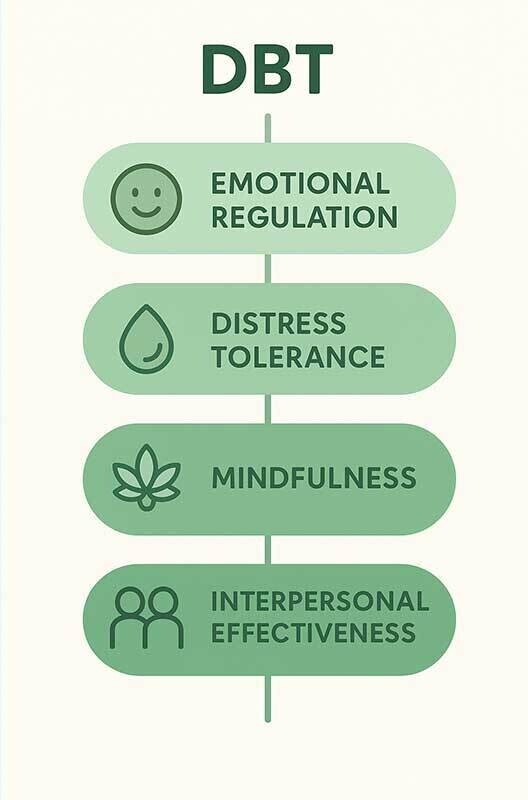
The DBT programme is built around four key skill areas:

  • Mindfulness – learning to stay present, aware, and grounded in the moment
  • Interpersonal effectiveness – developing healthy, assertive communication and maintaining meaningful relationships
  • Emotion regulation – understanding and managing emotional responses
  • Distress tolerance – coping with crises and intense feelings without making the situation worse

The main goals of DBT are to help individuals live more fully in the present moment, develop healthier ways to cope with stress, and regulate emotions in a balanced way. It also supports better communication and relationship-building skills, encouraging a more stable and fulfilling life.

What makes DBT “dialectical”?

The term “dialectical” means balancing opposites. In DBT, this refers to finding the middle ground between acceptance (acknowledging yourself and your experiences as they are) and change (working toward growth and improvement). This balance is central to DBT’s effectiveness as it teaches people to accept reality without judgment while still striving for positive, lasting change.

This dialectical approach helps clients challenge “all-or-nothing” thinking, reduce emotional extremes, and respond more calmly and flexibly to life’s difficulties.

What conditions can DBT help with?

Although DBT was first designed to treat Borderline Personality Disorder (BPD), it has since been proven effective for a wide range of emotional and behavioural difficulties, including:

  • Bipolar Disorder
  • Attention Deficit Hyperactivity Disorder (ADHD)
  • Eating Disorders
  • Generalised Anxiety Disorder (GAD)
  • Obsessive-Compulsive Disorder (OCD)
  • Post-Traumatic Stress Disorder (PTSD)
  • Depression
  • Substance Use Disorders
  • Suicidal or self-harming behaviours

DBT can benefit anyone who finds their emotions overwhelming, struggles with impulsive actions, or feels “stuck” in patterns of distress, conflict, or instability.

What are the benefits of DBT?

DBT has been widely researched and is known to produce significant, long-term improvements in emotional and psychological well-being. Some key benefits include:

  • Greater emotional stability and control
  • Reduced impulsive or self-destructive behaviours
  • Improved ability to manage stress and distress
  • Stronger, healthier relationships
  • Decreased symptoms of anxiety and depression
  • Enhanced mindfulness and self-awareness
  • A more positive and hopeful outlook on life
  • A greater sense of inner calm and confidence

DBT empowers people to recognise their strengths, use them effectively, and move forward with a clearer sense of purpose and direction.

What problems does DBT help solve?

DBT helps individuals become more emotionally resilient and self-aware. It equips them with practical tools to cope with negative thoughts and emotions, manage anxiety and stress and reduce depressive symptoms. The therapy teaches skills such as:

  • Distress tolerance, which helps individuals manage crises and tolerate painful feelings without resorting to harmful behaviours
  • Mindfulness, which encourages living in the moment and observing emotions without judgment
  • Emotion regulation, which promotes understanding, reducing, and balancing emotional responses
  • Interpersonal effectiveness, which focuses on maintaining boundaries, expressing needs clearly, and strengthening relationships

Why DBT works

DBT is effective because it addresses both the acceptance of where you are right now and the motivation to change. It offers a structured framework for growth, but it is also deeply validating recognising that emotional pain and struggle are part of being human.

By learning how to balance these two forces, individuals gain the tools to create meaningful, long-lasting improvements in their mental health and relationships.

How I might use DBT

I use DBT-based treatment as part of a comprehensive therapy plan tailored to each individual’s needs. The process begins with a detailed assessment to gain a thorough understanding of your experiences and goals. During therapy sessions, I teach DBT skills that can help you manage your emotions more effectively and support you in practising these techniques in a safe, collaborative space.

Between sessions, you will be encouraged to apply these skills in your daily life through practical exercises and reflection. This helps strengthen your confidence in using them when faced with emotional or stressful situations.

Together, we will identify and work toward meaningful goals that align with your values, promoting a sense of purpose and personal growth.
The ultimate aim of DBT is to help you build a life that feels stable, fulfilling, and worth living where you can respond to challenges with clarity and self-compassion rather than reactivity or avoidance.